RADA and Newport Fersan Signal Stronger Collaboration for Modern, Sustainable Farming
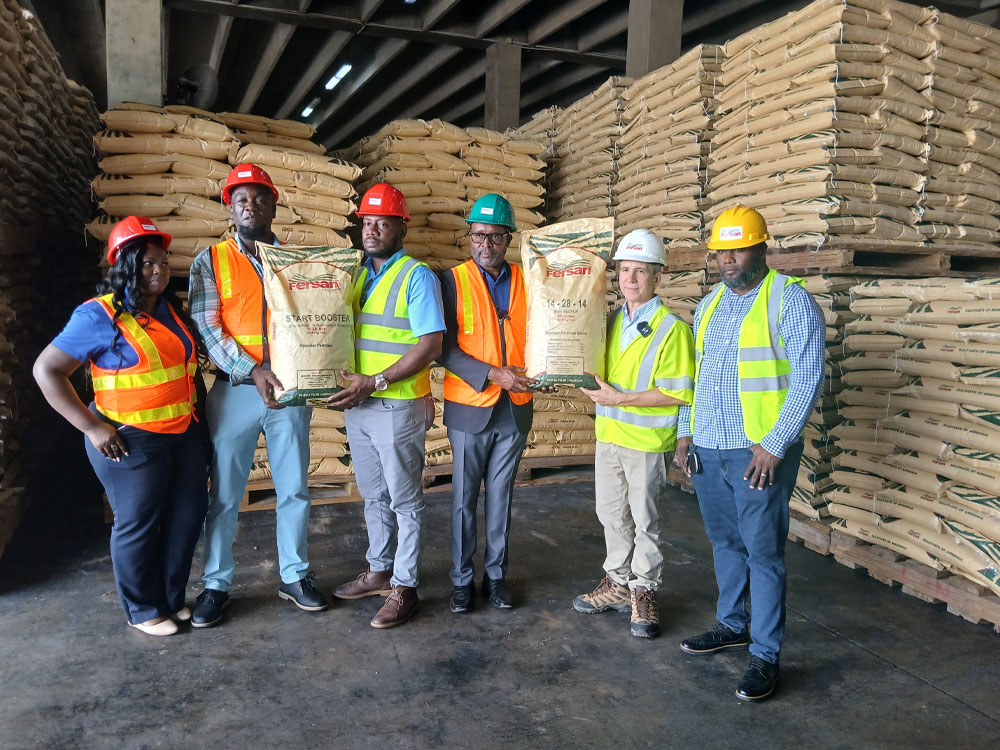
In a move aimed at strengthening Jamaica’s agricultural resilience and modernizing farm practices across the island, Chief Executive Officer of the Rural Agricultural Development Authority (RADA), Garnet Edmondson, led a team of key stakeholders on a tour of the Newport Fersan facility in Newport West. The delegation was hosted by Dennis Valdez, Managing Director of Newport Fersan Jamaica Limited.
The visit underscored a shared commitment between RADA and Newport Fersan to deepen their partnership, with a strong focus on improving the diversity, productivity and sustainability of Jamaican farmers. Central to the discussions was the integration of soil mapping and data-driven agronomy, which both organizations see as critical to guiding farmers as traditional practices continue to evolve.
“This collaboration will provide valuable information that can guide both entities in supporting farmers more effectively. We are willing to work together and share data that will drive growth at the farm level, which ultimately strengthens national food security and economic development,” Edmondson said.
Valdez echoed similar sentiments, noting that understanding farmers’ realities is key to successful innovation. “It is important to learn the language of the farmers. While traditional farming methods remain important, they are evolving into more modern systems. We need to get back to the roots of sound nutrition programmes that manage soil health and help farmers navigate challenges such as droughts and hurricanes,” he said.
Valdez noted that soil quality across the island has changed significantly over the past decade, with many soils no longer containing the nutrient levels they once had. At the same time, the mindset of farmers is shifting as they seek higher yields and faster results, sometimes leading to over-fertilisation.
“Farmers are often applying more fertilizer than necessary. It is in the best interest of both Fersan and RADA to train farmers in the right methods, ensuring efficient use of inputs while protecting soil health,” he said.
Edmondson highlighted that RADA is currently undergoing organizational restructuring, with particular attention being paid to its agronomy department. The goal, he said, is to strengthen on-the-ground training, demonstrations and technical support for farmers nationwide.
“We are reorganizing to ensure that our agronomy teams are better equipped to provide proper training and real-time demonstrations. This is essential if we are to support farmers in adopting best practices and maximizing productivity,” he said.
RADA he said is intensifying efforts to increase yam and pineapple yields through improved agronomic practices, soil testing and targeted farmer training across the island. By promoting proper spacing, balanced fertilizer application and climate-smart techniques, RADA aims to address declining soil fertility and reduce the effects of drought and extreme weather on production.
The organization is also strengthening on-the-ground demonstrations through its restructured agronomy department, helping farmers adopt modern methods while improving crop quality, consistency and overall productivity in both yam and pineapple cultivation.
During the tour, the RADA team and stakeholders also observed first-hand the operations at Newport Fersan, including the manufacturing and distribution processes for fertilizers. The facility plays a key role in supplying fertilizer products to farmers across the island, making it a strategic partner in Jamaica’s agricultural value chain.
The tour concluded with a shared commitment to continued engagement and deeper collaboration in the months ahead, one that places farmers, soil health and sustainable growth at the centre of Jamaica’s agricultural future.